
Running a Sex Offender Check in Culberson County
The Texas Public Sex Offender Registry is the main official channel for Culberson County. Texas DPS maintains the public profiles and supports name, address, geographic, and map-oriented searches. Begin with a Culberson County filter. Then repeat the search for Van Horn because a city entry and a broad Culberson County view can organize results differently.
Use an address or map search for awareness near a specific place. Use a name search when the identity is already known. The public registry can show a current location, status, reportable offense, and registration details, but it does not supply every criminal case or arrest tied to a person. It also omits fields that Texas law keeps private.
Culberson County and Van Horn Registry
Culberson County covers a large rural area, while Van Horn is its only incorporated city. Search both geographic labels. A resident inside a municipality normally registers with the municipal local law-enforcement authority. A resident outside a municipality normally registers with the Culberson County sheriff. Van Horn has no verified city police department, so the Culberson County Sheriff's Office is the practical first call for the correct registration authority.
Call 432-283-2060 before visiting. Ask where a Van Horn or rural Culberson County resident must register, whether an appointment is required, and what reporting schedule applies. The official county material does not publish a separate registry counter, street location, or hours. DPS answers state-program questions at 512-424-2800.
Geography also changes how a reader should interpret an address result. A town search can miss a rural location described by a Culberson County route or ZIP, while a broad Culberson County search may be less useful near one home or route. Run both, then inspect the profile's address type and status. For a location near the Culberson County line, add an NSOPW search so the query is not cut off at the Texas or county boundary.
Searching the Texas Public Sex Offender Registry
The Texas DPS interface supports several routes, so the best method depends on the question. Preserve the criteria used and the date of the search. A partial name may return several profiles, while a street and ZIP search is better for nearby awareness. Exact radius options can change, so confirm them in the live portal.
- Open the official Texas registry and review its conditions and safety notice.
- Choose a name search or a geographic search by address, city, county, ZIP, radius, or map.
- Run Culberson County and Van Horn searches, then compare identifiers before opening a profile.
- Read the full registration status and report concerns through official law-enforcement contacts.
| Field or control | Type | Required | Use |
|---|---|---|---|
| Last name or initial | Text | Name mode | Partial or initial search available |
| First name | Text | Optional | Narrows a name result |
| Address | Text | Geographic mode | Street, city, and ZIP components |
| City | Text or dropdown | Geographic mode | Use Van Horn |
| County | Dropdown | Optional | Use Culberson |
| ZIP code | Text | Optional | Use 79855 or the relevant county ZIP |
| Radius and map | Dropdown and map | Optional | Pan, zoom, and proximity tools |
| Submit or clear | Buttons | As needed | Run or reset the search |
Repeat the query with a second method when the first view is too broad. A Culberson County filter is good for scope, an address search is good for place, and a name plus first name helps separate similar profiles.
Culberson County Mobile Registry Map
The official Texas DPS mobile application includes a statewide sex-offender map. It can add a phone-based proximity view when the browser registry is awkward in the field. It is a state tool, not a Culberson County sheriff app. No separate sheriff or Van Horn law-enforcement app was verified.
Use the map as a starting point. Open the linked profile and read its address status, verification details, and identifiers. A marker alone is not enough to resolve a similar name or explain why the person has a duty to register. Save urgent reports for 911 and direct nonurgent address concerns to the Culberson County sheriff or DPS.
What a Registry Profile Shows
A Texas public profile combines identity, location, offense, and registration fields that state law allows DPS to release. The exact display varies with the record. Missing fields are not permission to infer private details.
| Name and aliases | Published names plus DPS SID or other registration identifiers |
|---|---|
| Photo and description | Current image and public sex, race, age or birth data, height, weight, hair, and eyes |
| Registered location | Address or geographic location plus address status |
| Offense | Reportable offense, statute, court jurisdiction, and public conviction or adjudication details |
| Risk and status | Texas risk label plus verification and registration information |
| Other public traits | Vehicles, scars, marks, tattoos, or school information where law and profile rules allow |
| Nonpublic data | SSN, driver's-license number, phone, online identifiers, confidential DPS data, and victim identity |
Juvenile registration can also be ordered nonpublic. Public access is therefore a defined disclosure set, not an unrestricted file.
Culberson County and NSOPW Records
The Department of Justice National Sex Offender Public Website is the official cross-state layer. It queries participating jurisdiction registries, which is useful when a name, move, or address search may cross the Texas line.
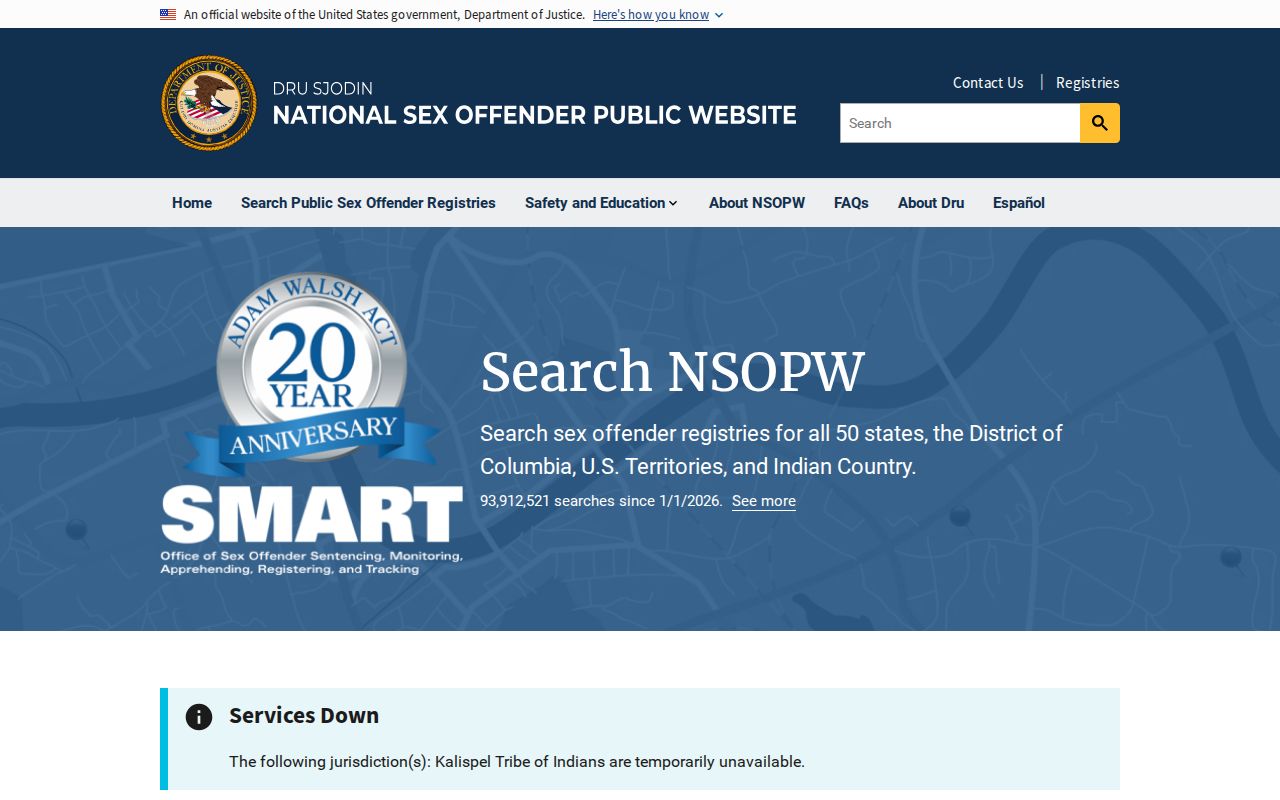
NSOPW broadens the geography, while the Texas registry remains the better source for the state's profile format and local reporting details. Use both when the search is not confined to Culberson County.
An FBI Identity History Summary is a different product used for a person's own fingerprint-based federal record review.

The federal summary does not replace a Texas registry search. That distinction keeps a Culberson County registration query from being confused with a broad rap sheet request.
Registration Requirements and Levels in Texas
Texas uses low, moderate, and high risk-assessment labels for management and public notification. Those labels are not federal SORNA Tier I, II, and III categories. They do not automatically determine how long a person must register. Duration follows Code of Criminal Procedure article 62.101 and the exact reportable offense, disposition, release, supervision, and repeat-offense facts.
| Concept | Duration | Public meaning |
|---|---|---|
| Low, moderate, or high | Not a duration formula | Texas risk and notification label |
| Ten-year duty | Commonly ten years after release or discharge | Applies only to listed statutory categories |
| Lifetime duty | Lifetime | Applies to enumerated serious or repeat reportable convictions |
| Verification | Varies | Confirm the profile and registering authority instructions |
Do not convert a low-risk label into a ten-year assumption or a high-risk label into a lifetime assumption. Read the profile, then use the statute or DPS program contact for the exact obligation.
Culberson County Registry Notification
Texas DPS explains public notification and local registration, including the state and Culberson County registration roles.
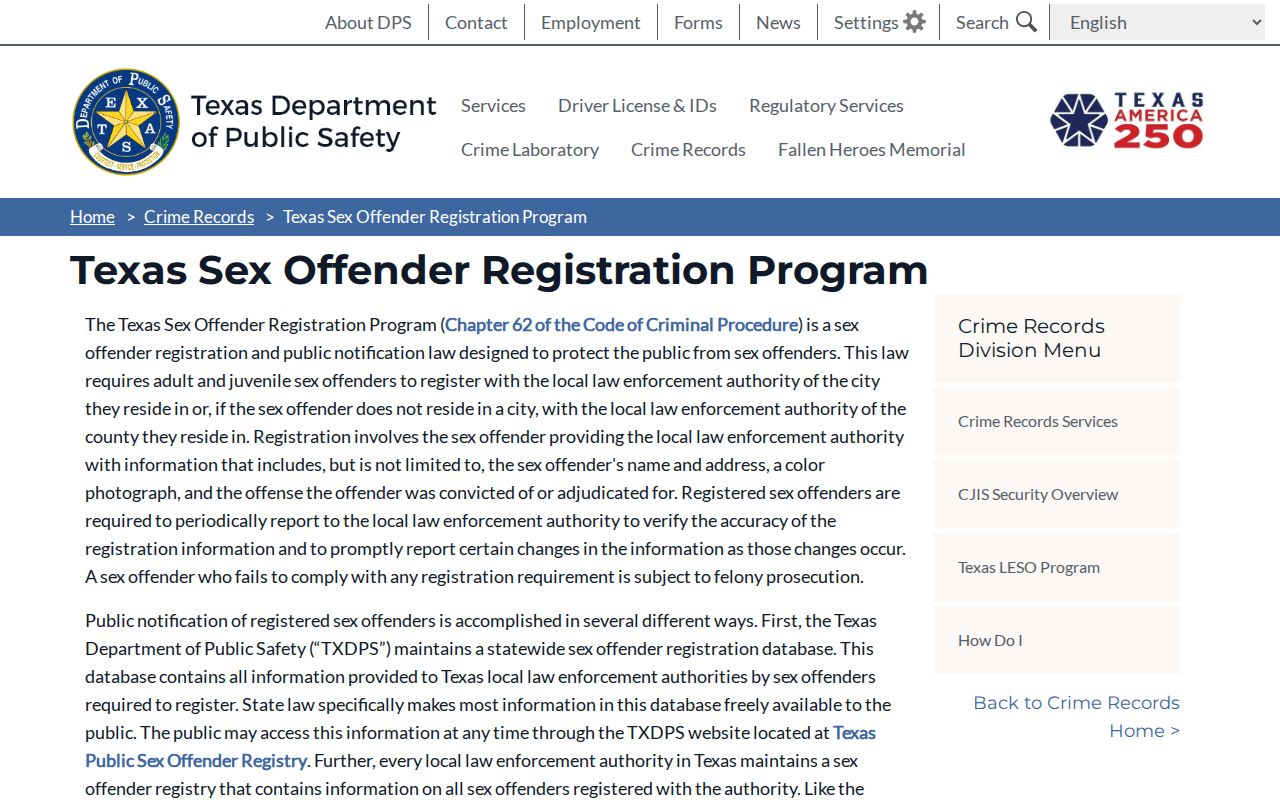
Chapter 62 makes most registration data public and requires Culberson County authorities to transmit local data to DPS. For high-risk or civilly committed cases, community notification can include postcards in English and Spanish. The notice is meant to support informed safety steps. It is not a call for direct contact.
Registration can overlap with parole, but the systems are not the same. The Texas Board of Pardons and Paroles handles release decisions, while DPS and local authorities handle the registry program.
A person may have a registration duty without current parole supervision, or supervision records may contain details that the registry does not. The public profile should be read only for its stated registry purpose.
Report Culberson County Registry Concerns
If a location appears stale or a registration condition looks unmet, do not confront the person or household. Record the public profile, address shown, and the time of the observation. Call the Culberson County Sheriff's Office at 432-283-2060 for the correct local route. Texas DPS can answer program questions at 512-424-2800. Call 911 only for an immediate danger.
The DPS Crime Records contact page lists bureau contacts for the state record system.
That state contact complements the sheriff's local role. It does not replace 911 for danger or local law enforcement for suspected noncompliance.
Lawful Use and Community Notification
Registry information supports personal, family, and community awareness. It should guide calm steps such as reviewing the official profile, checking a map, discussing safety plans, and reporting a concern through law enforcement. A listing does not predict new conduct. It also does not show every arrest, case, or sentence in the person's history.
Use registry information lawfully: Code of Criminal Procedure Chapter 62 does not permit public registry data to be used to injure, harass, threaten, or commit a crime against a registrant or household.
The warning on the registry is part of the public-use rule, not boilerplate. Do not republish protected identifiers, organize vigilantism, or visit an address to test its accuracy. Send a noncompliance concern to the sheriff or DPS and let the responsible agency verify it.
Culberson Registry Is Not Arrest History
A Culberson County registry listing means the person has a current Texas reporting duty and public fields authorized by Chapter 62. It is not proof of a recent arrest, a new charge, or current custody. Risk labels are not guilt findings for new conduct. For the filed charge and outcome behind a local prosecution, use the Culberson County clerk's court record.
The distinction also works in reverse. A person may have an arrest or conviction that never created a registration duty, or a duty may end under the statute. Use the registry for location and registration status. Use court, arrest, or repository channels for the separate record question they were built to answer.
Dates deserve the same care. A conviction date, release date, verification event, and ending-registration date answer different questions. An old conviction can still support a current duty, and a recent verification does not mean a new offense occurred. Read each label as written before drawing a timeline.